Medical and nursing education
LMMs can generate tailored learning texts, simulate patient conversations (including rare conditions or disabilities), and provide chain-of-thought explanations. Yet incorrect or fabricated content can undermine education quality, and students may defer judgement to the model (automation bias). WHO also notes a new digital literacy burden — professionals must learn to use AI-supported tools while maintaining core clinical skills.
Scientific research and drug development
LMMs can draft manuscripts, summarise literature, analyse datasets, proofread grants, and support de novo drug design. Major publishers and the World Association of Medical Editors restrict authorship to humans because AI cannot assume accountability. Other risks include:
- Hallucinated references — citations to papers that do not exist
- High-income country bias in training data and outputs
- Undermining peer review if opaque AI-generated reviews proliferate
- Paywalled access exacerbating knowledge divides among researchers
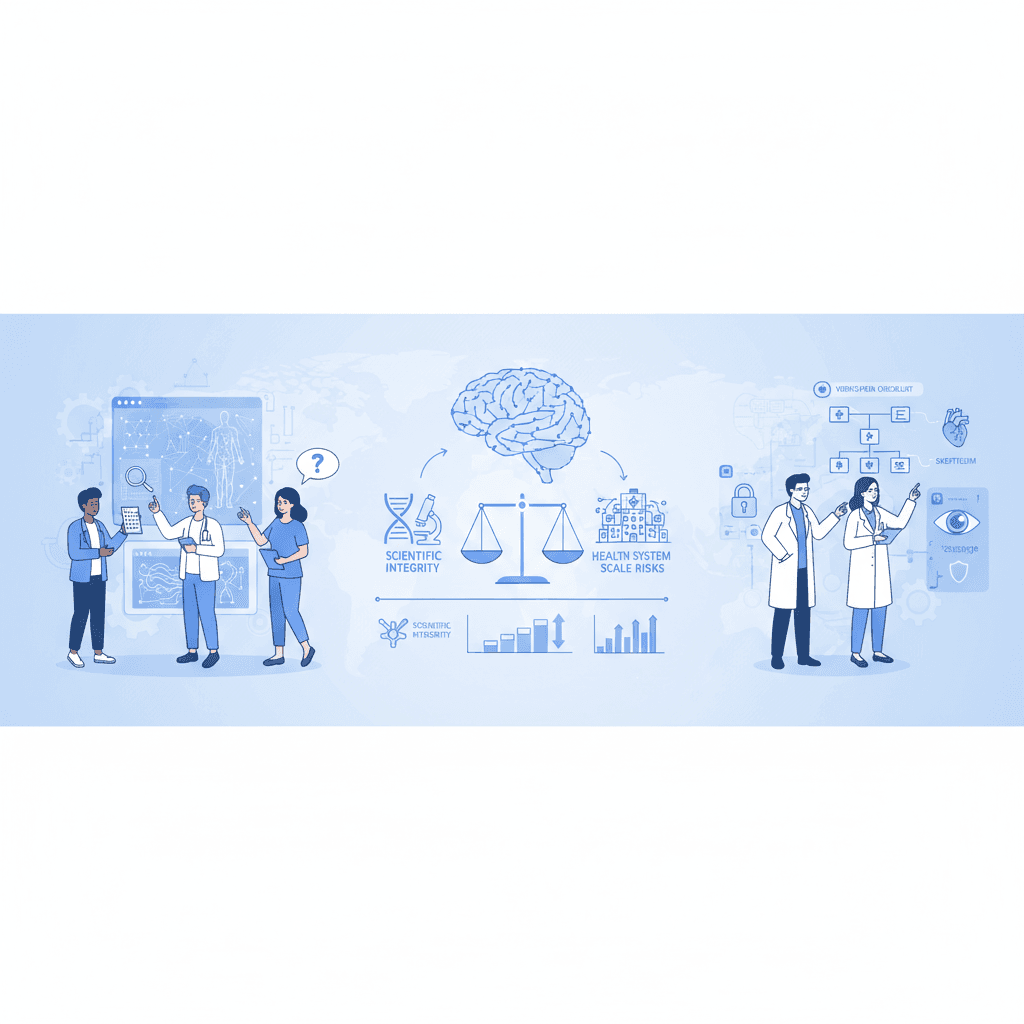
Systemic health system risks
WHO groups broader risks that affect entire health systems:
| Risk | What it means |
|---|---|
| Technological solutionism | Overestimating LMM benefits while underinvesting in proven non-AI interventions |
| Accessibility & affordability | Subscription fees, English-centric models, and digital divides limiting equitable access |
| System-wide bias | Larger models may encode biases that propagate across institutions |
| Workforce impacts | Retraining needs, annotation labour concerns, and potential de-skilling |
| Dependence | Health systems reliant on models not maintained for local contexts |
| Cybersecurity | Prompt injection, data breaches, and attacks on AI-dependent infrastructure |
For Hong Kong healthcare professionals
When using LMMs for CME, teaching, or research writing, disclose AI use per journal and institutional policy. Prioritise human accountability and verify every citation. In hospital governance discussions, ask whether LMM investments divert resources from evidence-based programmes that already improve population health in Hong Kong.